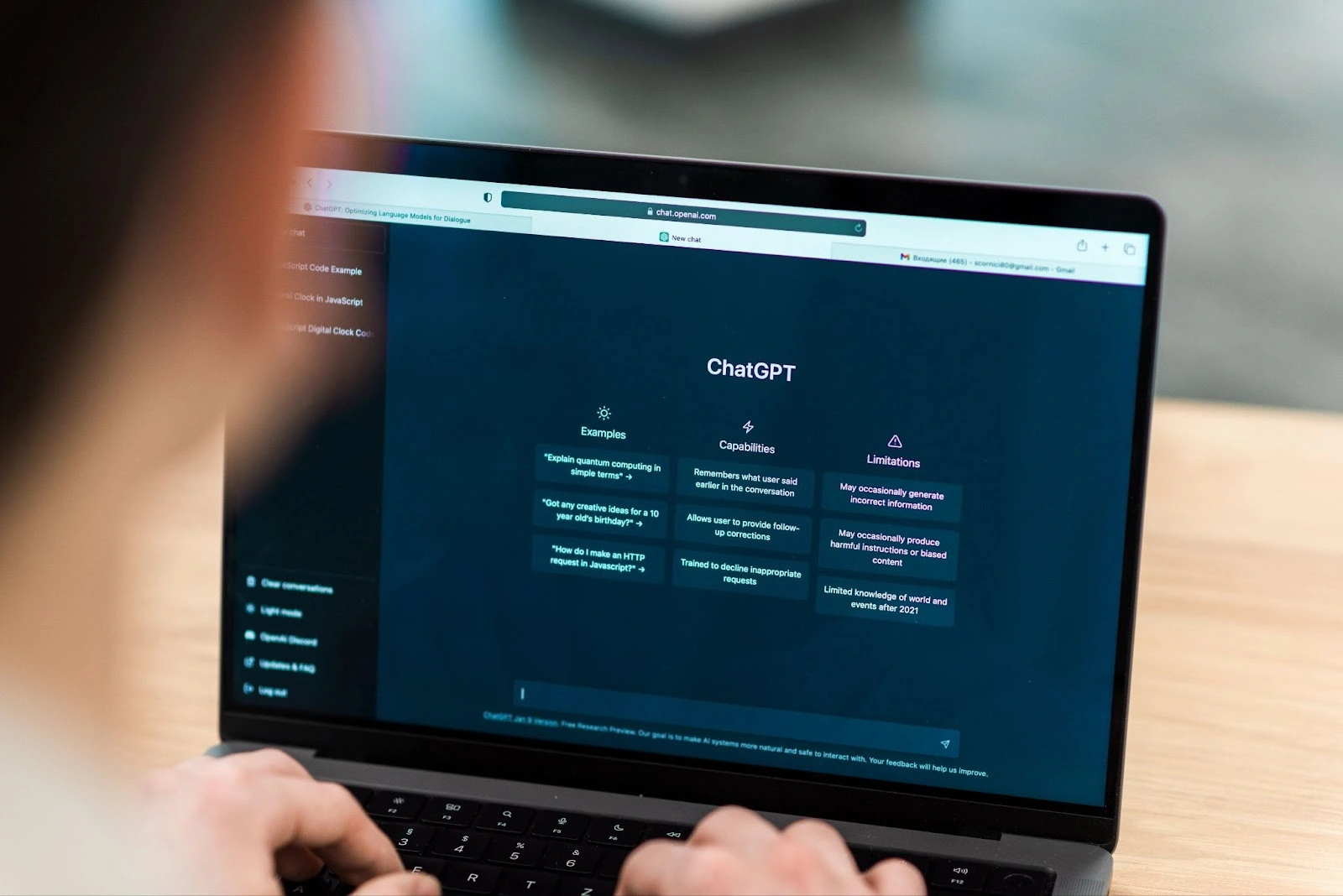
Magento SEO for ChatGPT provides a powerful, AI-driven approach to enhancing the visibility and performance of Magento 2 stores. By integrating ChatGPT into SEO workflows, merchants can automate large-scale content creation, streamline metadata optimization, accelerate keyword research, and improve structured data implementation. This modern framework enables Magento stores to deliver more authoritative, search-optimized content while reducing manual workload and increasing overall operational efficiency.
Nội dung bài viết
- 1 How ChatGPT Can Transform SEO for Magento 2 Stores
- 2 Magento SEO Best Practices for ChatGPT and AI Search Engines
- 2.1 Build Semantic-Rich Content Over Keyword-Stuffed Pages
- 2.2 Use Entity-Based Optimization to Define Your Brand
- 2.3 Optimize For Helpful Content Signals
- 2.4 Strengthen Structured Data and Schema Markup
- 2.5 Build Topical Authority Through Content Clusters
- 2.6 Improve Trust, Authenticity, and Reputation (E-E-A-T)
- 2.7 Optimize User Experience and Technical Quality
- 2.8 Internal Linking for AI Contextual Mapping
- 2.9 Support AI With Clear Answer Blocks
- 3 Avoid Common Magento SEO Mistakes That Hurt AI Visibility
- 4 Conclusion
How ChatGPT Can Transform SEO for Magento 2 Stores
ChatGPT can transform SEO for Magento 2 stores by automating and enhancing critical optimization tasks such as high-volume content generation, on-page SEO element creation, and keyword research. Through dedicated Magento 2 extensions that integrate AI directly into the platform, merchants can shift from manual, page-by-page optimization to a more scalable and systematic approach.
This transition toward AI-powered SEO automation enables Magento stores to execute optimization workflows more efficiently, maintain consistency across large catalogs, and adapt faster to evolving search algorithms without increasing operational complexity.
Key Transformation Areas
- AI-generated content: The primary benefit is the ability to generate unique, high-quality content at scale. Extensions allow for the mass generation of product descriptions, category text, and even blog posts across a large inventory with a single click. This saves significant time and ensures all pages have relevant, keyword-optimized content.
- On-Page SEO Optimization: ChatGPT streamlines the creation of essential metadata, which is crucial for search engine visibility. It can generate compelling:
- Meta titles and descriptions for products, categories, and CMS pages.
- Keyword suggestions based on product data and market trends.
- Structured data (rich snippets) to enhance search result listings with details like price and ratings.
- Improved Customer Engagement: AI-driven chatbots can provide real-time, personalized customer support, answer queries, and offer product recommendations. This improves the user experience, increases the time visitors spend on the site, and reduces bounce rates, which are all positive SEO signals.
- Multilingual Content Support: For stores targeting international audiences, ChatGPT integrations can produce content in multiple languages, helping to serve a diverse customer base and expand global SEO reach.
- AI-Powered Keyword Research: Instead of manual analysis, AI tools can analyze search trends and competitor strategies to suggest high-potential keywords.
The Magento ChatGPT Extension can analyze trends, competitor strategies, and search data to suggest high-potential keywords for your content. - Conversion of Search Intent: New protocols allow merchants to link their product catalogs directly to the AI, enabling users to browse and purchase products within the chat interface itself, effectively turning conversational search intent into direct sales.
By leveraging ChatGPT extensions for Magento 2, merchants can make data-driven decisions and streamline operations, leading to improved rankings, increased organic traffic, and enhanced customer acquisition
Magento SEO Best Practices for ChatGPT and AI Search Engines

Build Semantic-Rich Content Over Keyword-Stuffed Pages
AI search engines utilize Natural Language Processing (NLP) to understand intent. They no longer look for the exact phrase “blue running shoes” 20 times on a page; instead, they look for the context that proves you understand what blue running shoes are, who uses them, and why they matter.
Expand Macro Semantic Coverage
To satisfy AI, your content must address the user’s main intent comprehensively. If a user asks an AI, “What are the best energy-efficient appliances for a small kitchen?” the AI will look for pages that discuss energy ratings, dimensions, and specific small-space utility—not just a list of products.
Add Micro Semantic Context
Go beyond basic features. Include:
- Specifications: Detailed technical data.
- Use Cases: “Ideal for urban commuting” or “Best for high-altitude hiking.”
- Comparisons: How this product differs from the previous model or competitors.
- FAQs: Direct answers to common barriers to purchase.
Apply to Magento Architecture
- Category Pages: Move away from just a grid of products. Add buying guides and contextual paragraphs that explain the nuances of the category.
- Product Pages: Transform descriptions into “product stories” that include who the product fits and real-world scenarios.
- Blog Pages: Use the Magento CMS to build long-form content that expands on entities (brands, materials, technologies) related to your inventory.
The Magento 2 ChatGPT Extension by BSS Commerce is the practical tool to make these strategies achievable: it helps you expand macro semantic coverage and enrich micro semantic context directly within Magento. You can easily generate buying guides, FAQs, contextual explanations, and “product stories” instead of relying on manual content creation. As a result, your store becomes more AI-friendly while delivering richer, more helpful content for users.
>>> Explore full feature here: https://bsscommerce.com/magento-2-chatgpt-extension.html
Use Entity-Based Optimization to Define Your Brand
AI engines think in “entities”—unique, well-defined objects or concepts. In the eyes of an AI, your store is an entity, your brands are entities, and your products are entities linked by relationships.
Best Practices for Entity SEO
To help AI map your store’s place in the “knowledge graph,” you must be consistent:
- Consistent Naming: Ensure your brand name, product names, and manufacturer details are identical across your site, social media, and third-party marketplaces.
- Attribute Mapping: Use Magento’s attribute sets to clearly define specifications (e.g., Material: Organic Cotton; Origin: Italy). AI uses these attributes to categorize your products accurately.
- Topic Authority: Link your products to broader concepts. If you sell specialized camera gear, your site should also define terms like “aperture” or “ISO” to establish itself as a topical authority.
Optimize For Helpful Content Signals
Google’s “Helpful Content” updates and AI training models prioritize evidence-based, human-centered information. AI is trained to filter out “SEO fluff”—content written solely for bots.
Making Magento Content Helpful
- Clarity over Cleverness: Use straightforward language that an AI can easily parse and summarize.
- Explanatory Depth: Instead of saying “High quality,” explain why (e.g., “Double-stitched seams for industrial-grade durability”).
- Avoid Manufacturer Clones: One of the biggest Magento SEO mistakes is using the exact description provided by the supplier. AI recognizes this as duplicate, low-value content. Rewrite these descriptions to add unique insights or expert opinions.
Strengthen Structured Data and Schema Markup
Structured data is the primary language AI engines use to “read” your database. Without proper Schema, an AI has to guess your price or availability; with it, the AI can confidently recommend your product in a real-time chat.
Must-Have Schema for Magento
Ensure your Magento theme or SEO extension correctly implements the following:
- Product Schema: Includes name, image, description, SKU, and brand.
- Offer Schema: Crucial for AI to see Price and Availability (In Stock/Out of Stock).
- Review & AggregateRating Schema: Social proof that AI uses to gauge trust.
- FAQ Schema: Directly provides AI with “answer blocks” to display in search results.
- Breadcrumb Schema: Helps AI understand your site’s internal hierarchy.
By maintaining updated, error-free Schema, you increase the likelihood of your products appearing in AI-generated “best of” lists and comparison tables.
Build Topical Authority Through Content Clusters
AI prefers stores that function as experts. Instead of writing random blog posts, organize your Magento content into clusters. This demonstrates to AI that you have deep, comprehensive knowledge of a specific niche.
The Cluster Strategy
Pick a core category (the “Pillar”) and surround it with supporting content (the “Spokes”).
Example for a “Coffee Equipment” Store:
- Pillar Page: The ultimate category page for Espresso Machines.
- Spoke 1: How to dial in an espresso shot.
- Spoke 2: Comparison: Boiler vs. Heat Exchanger machines.
- Spoke 3: Maintenance guide for home baristas.
- Spoke 4: Best espresso machines for small offices.
This structure tells AI that your site is the definitive source for the entity “Espresso Machines,” making it more likely to cite your store as a primary source.
Improve Trust, Authenticity, and Reputation (E-E-A-T)
AI search engines are programmed to avoid recommending “risky” or untrustworthy sites. They look for signals of Experience, Expertise, Authoritativeness, and Trustworthiness (E-E-A-T).
Strengthening Trust Elements in Magento
- The “About” Page: Don’t be generic. Share your brand story, your mission, and the faces behind the company.
- Author Bylaws: If you have a blog, ensure articles are attributed to real people with bios and links to social profiles.
- Transparent Policies: Clearly link to your Shipping, Returns, and Warranty policies in the footer. AI bots crawl these to determine if you are a legitimate business.
- Social Proof: Integrate real customer reviews and display industry certifications or awards prominently.
Optimize User Experience and Technical Quality
While AI focuses on content, it also considers how a user interacts with that content. If an AI refers a user to a page that takes 10 seconds to load or has broken layouts, the AI’s “confidence” in that source drops.
Magento UX Checklist for AI
- Core Web Vitals: Optimize your Magento instance to pass LCP, FID, and CLS. Fast loading is non-negotiable.
- Mobile-First Design: Most AI interactions happen on mobile. Ensure your navigation is seamless on small screens.
- Information Hierarchy: Use H1, H2, and H3 tags correctly. AI uses these as a table of contents to understand your page structure.
- Clean Layouts: Avoid aggressive pop-ups or “interstitials” that block the main content. If an AI bot can’t see the content because of a pop-up, it can’t index it.
Internal Linking for AI Contextual Mapping
Internal links are the “connective tissue” of your website. They tell AI which pages are the most important and how different topics relate to one another.
Strategic Linking in Magento
- Breadcrumbs: Always enable breadcrumbs to show a clear path from Product → Subcategory → Category.
- Cross-Linking: Link from your blog posts to relevant product categories using descriptive anchor text (e.g., “view our professional hiking boots” rather than “click here”).
- Related Products: Use Magento’s “Related Products” and “Upsells” features to create a web of relevant entities that AI can follow.
Support AI With Clear Answer Blocks
AI search engines like ChatGPT often “scrape” or summarize specific parts of a page to provide a direct answer to a user. You can optimize for this by creating “snippet-ready” sections.
How to Format Answer Blocks
- Summary Paragraphs: Start your category or blog pages with a 2-3 sentence summary.
- Bullet Points: Use lists for features, benefits, or “how-to” steps. AI loves lists for easy formatting.
- Comparison Tables: Use HTML tables to compare product specs. This is the easiest way for an AI to extract data for a “Which one should I buy?” query.
- Pros & Cons: Explicitly list the strengths and weaknesses of a product. This adds a layer of honesty that AI models interpret as high-quality, unbiased content.
Avoid Common Magento SEO Mistakes That Hurt AI Visibility
To succeed in the AI era, you must clean up legacy SEO technical debt. Many standard Magento setups have “leaks” that confuse AI crawlers.
Mistakes to Fix
- Duplicate Content: Use canonical tags to ensure AI doesn’t get confused by layered navigation (filters) creating multiple URLs for the same content.
- Thin Content: If a category page only has two products and no text, it is “thin.” Consolidate small categories or add meaningful descriptions.
- Missing Image Alt Text: AI uses Alt text to “see” your products. Ensure every product image describes what the item is.
- Broken Redirects: Ensure your 301 redirects are clean. A chain of redirects confuses bots and signals a poorly maintained site.
Conclusion
Magento SEO for ChatGPT represents a transformative shift in how Magento merchants manage and scale their optimization efforts. By leveraging AI-powered automation, stores can enhance content quality, strengthen keyword strategies, and achieve higher search visibility with far greater efficiency. As generative search evolves, integrating ChatGPT becomes essential for maintaining competitive SEO performance and delivering a smarter, more adaptive eCommerce experience.