Scaling an Adobe Commerce or Magento store brings unique challenges, particularly when managing thousands of SKUs and categories. Manual optimization is no longer viable for enterprise-level growth. This guide explores how Magento SEO automation with AI tools transforms maintenance into a proactive strategy.
By integrating machine learning into your workflow, you can ensure consistency, speed, and technical excellence. As we look toward Magento SEO trends in 2026, automation stands as the primary competitive advantage for retailers looking to dominate search engine results pages without exponentially increasing headcount.
Nội dung bài viết
- 1 Why Magento SEO Becomes Unmanageable At Scale
- 2 How Magento SEO Automation With AI Tools Works
- 3 How To Automate Magento SEO With AI Tools
- 3.1 Audit And Group SEO Tasks By Automation Potential
- 3.2 Automate Technical SEO Monitoring
- 3.3 Automate Metadata Generation With Quality Controls
- 3.4 Automate Thin And Duplicate Content Detection
- 3.5 Automate Internal Linking At Scale
- 3.6 Automate SEO Performance Monitoring And Alerts
- 3.7 Apply Automation To New Products And Categories
- 3.8 Review, Test, And Refine Automation Rules
- 3.9 Scale Automation Across Stores And Languages
- 3.10 Measure Results And Maintain Long-Term Control
- 4 Conclusion
Why Magento SEO Becomes Unmanageable At Scale
For stores with massive catalogs, the sheer volume of data makes manual oversight impossible. Every new product launch, category update, or promotional campaign introduces potential SEO risks.
Without a robust SEO plugin for Magento 2, teams often find themselves buried in “SEO debt”—a backlog of broken links, missing metadata, and duplicate content that degrades site authority over time.
How AI-Driven Automation Supports Ongoing SEO Operations
AI does not replace the SEO strategist; it acts as a force multiplier. While a human might take hours to audit 500 pages for keyword cannibalization, an AI model can process 50,000 pages in minutes. This allows for continuous optimization rather than periodic “sprints” that leave the store vulnerable between audits.
By utilizing TOP Magento 2 AI extensions for better SEO, merchants can automate the heavy lifting of data analysis, allowing them to focus on high-level market positioning and brand growth.
Benefits of Using AI in SEO Automation
Implementing automation offers a significant return on investment by protecting organic revenue and reducing operational costs.
- Reduced Manual SEO Workload: Teams shift from data entry and basic auditing to high-level strategy and conversion rate optimization.
- Faster Detection of Technical and On-Page Issues: AI identifies 404 errors, redirect loops, and server lag in real-time, allowing for instant remediation.
- Consistent SEO Implementation Across Products and Categories: Automated templates ensure that every new product, regardless of who uploads it, meets the store’s SEO standards.
- Better Prioritization of SEO Fixes Based on Impact: AI can cross-reference SEO issues with sales data, telling you exactly which fixes will yield the highest revenue impact.
How Magento SEO Automation With AI Tools Works
The transition to automated SEO requires moving away from static spreadsheets and toward dynamic, data-driven systems. Implementing AI allows your store to interpret search engine requirements in real-time.
AI Analyzes Crawl, Indexation, And Content Patterns Across The Store
AI tools ingest data from Google Search Console, server logs, and site crawls to create a holistic map of store health.
By analyzing these patterns, the AI can predict which pages are likely to be “de-indexed” or which URL structures are causing crawl budget waste. This predictive capability is essential for managing the massive overhead of enterprise e-commerce.
Repetitive SEO Tasks Are Handled Using Rules And Machine Learning Models
Automation works by combining hard-coded business rules (e.g., “Always include the brand name in the Meta Title”) with machine learning models that can suggest creative improvements or detect semantic relevance between products.
This ensures that even as the catalog grows, the quality of optimization remains high.
Automation Runs Continuously Instead Of One-Off Optimizations
Unlike a monthly audit, AI-driven automation is “always on.” If a developer pushes a code change that breaks canonical tags on category pages, an automated system detects the drop in technical health immediately, preventing long-term ranking damage.
Human Oversight Is Applied At Predefined Control Points
Effective automation uses a “Human-in-the-Loop” (HITL) model. AI handles the high-volume execution, while human experts review high-value pages or approve bulk changes before they go live, ensuring brand voice and accuracy remain intact.
How To Automate Magento SEO With AI Tools
Audit And Group SEO Tasks By Automation Potential
The first step in any automation journey is identifying which tasks are ripe for machine assistance.
- Identify Repetitive, High-Volume SEO Tasks: Look for tasks that take up the most manual hours, such as writing meta descriptions for 10,000 new SKUs or manually tagging images with alt text.
- Separate Monitoring, Optimization, and Decision-Based Tasks: Monitoring (e.g., checking for 404s) is easiest to automate. Optimization (e.g., improving content) is moderate. Decision-based tasks (e.g., choosing a brand direction) should remain human-led.
- Prioritize Automation by Scale Impact: Focus on the “low-hanging fruit” where a single automation rule can fix thousands of pages simultaneously, such as category-wide schema markup.
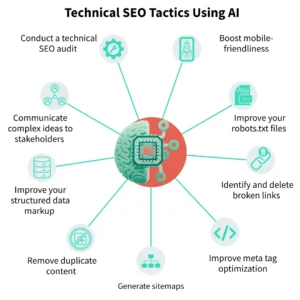
Automate Technical SEO Monitoring
Technical SEO is the foundation of any Magento store. AI crawlers can monitor your site’s health 24/7 without the fatigue of a human auditor.
- Set Up AI-Driven Crawl Error Detection: Use tools that simulate search engine bots. AI can categorize 404 errors—distinguishing between a temporary out-of-stock product and a permanent category deletion that requires a 301 redirect.
- Track Indexation Issues Across Large Catalogs: For catalogs with 100,000+ SKUs, Google may not crawl everything. AI monitors your XML sitemaps and flags “orphaned” pages that aren’t being indexed, ensuring your crawl budget is spent on your most profitable pages.
- Flag Internal Linking and URL Structure Problems: Automated systems can detect if your URL depth is too deep (e.g., five clicks away from the homepage) or if your site structure has become fragmented after a site migration.
- Configure Alerts Instead of Auto-Fixes: In technical SEO, it is safer to configure AI to flag issues for review rather than allowing it to automatically change robots.txt or .htaccess files.
Automate Metadata Generation With Quality Controls
For stores with massive product lists, writing unique meta titles is impossible without automation.
- Create AI Rules for Product Meta Titles and Descriptions: Connect an LLM (like GPT-4 via a Magento extension) to your product attribute data.
- Apply Templates with Dynamic Attributes: Use Magento’s native attribute system to feed variables into the AI. If a product is “Winter Running Shoes,” the AI pulls the “Weather-Proof” and “Thermal” attributes to craft a compelling, keyword-rich description.
- Set Confidence Thresholds and Fallback Logic: Program the AI to publish metadata automatically only if its “relevance score” is above a certain threshold (e.g., 90%). If the AI is unsure, it defaults to a standard template.
- Exclude High-Value Pages from Full Automation: Your homepage and top-level categories should always have hand-crafted, human-reviewed metadata to ensure maximum brand impact.
Automate Thin And Duplicate Content Detection
Magento’s layered navigation and product variations often create duplicate content issues that can dilute your SEO authority.
- Identify Low-Content Product and Category Pages: AI scanners can detect “thin content” pages where the text-to-code ratio is too low or where the content is 95% identical to another page.
- Detect Near-Duplicate Content from Layered Navigation: Use AI to identify if the filter parameters (e.g., ?color=blue&size=m) are creating thousands of duplicate URLs that Google is wasting time crawling.
- Use AI Scoring to Prioritize Pages for Review: Instead of checking every filtered URL, the AI assigns a “Duplicate Risk” score, allowing you to focus on the highest-priority fixes.
- Automate Content Improvement Recommendations: Some AI tools can analyze top-ranking competitors for a category and recommend specific “missing” paragraphs to help your category pages rank better.
Automate Internal Linking At Scale
Internal links distribute “link equity” and help search engines understand your site’s hierarchy.
- Detect Orphaned and Underlinked Pages: AI identifies high-value products that have zero internal links from blog posts or category descriptions.
- Generate Contextual Internal Link Suggestions: Modern extensions scan your CMS pages and automatically hyperlink keywords (e.g., “leather boots”) to the relevant category URL based on the context of the sentence.
- Control Link Frequency and Anchor Variation: Automation ensures you aren’t using the exact same anchor text for every link, which helps avoid “over-optimization” penalties.
- Prevent Internal Link Spam in Large Catalogs: Set limits on the number of automated links per page to maintain a clean, user-friendly experience.
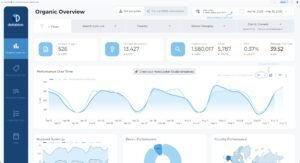
Automate SEO Performance Monitoring And Alerts
Move beyond basic rank tracking by using AI-driven anomaly detection.
- Track Ranking Volatility and Traffic Drops: AI can distinguish between normal daily fluctuations and a significant ranking drop caused by an algorithm update.
- Detect Anomalies Tied to Releases or Catalog Changes: Use automation to “tag” your SEO data whenever a new code deployment or catalog import occurs. This helps identify if a traffic drop was caused by a specific site change.
- Prioritize Alerts by Estimated Revenue Impact: Cross-reference your ranking drops with Magento’s sales data. An alert for a product that generates significant monthly revenue should be a higher priority than a low-margin SKU.
- Reduce Manual Reporting Workload: Automate the generation of weekly SEO reports that highlight trends, wins, and urgent issues, saving hours of spreadsheet work.
Apply Automation To New Products And Categories
Ensure SEO is built into your workflow the moment a product is added to your Magento backend.
- Auto-Assign Baseline SEO for New SKUs: Set up a “pre-publish” workflow where the AI generates the URL key, Meta Title, and Image Alt Tags before the product goes live.
- Validate SEO Rules Before Publishing: The system should prevent a product from being set to “Active” if it lacks essential SEO components like a canonical tag or a minimum word count.
- Handle Discontinued and Out-of-Stock Pages Safely: Automate what happens when a product goes out of stock. For temporary OOS, the AI can keep the page but add a “related products” block; for discontinued items, it can auto-generate a 301 redirect to the closest matching item.
Review, Test, And Refine Automation Rules
Automation is an iterative process that requires constant tuning.
- Run Controlled Tests on Page Groups: Apply an AI metadata rule to 10% of your products and monitor the performance in Google Search Console for 30 days before rolling it out store-wide.
- Monitor SEO Impact Before Scaling Further: Check if the automated changes are improving CTR and rankings or if they are causing unexpected drops.
- Adjust Rules Based on Real Performance Data: If the AI-generated titles are consistently too long for mobile search, refine your prompt constraints to favor shorter, punchier text.
Scale Automation Across Stores And Languages
For multi-storefront Magento setups, AI is the only practical way to handle global SEO.
- Apply Shared SEO Logic Across Store Views: Maintain a consistent SEO strategy while allowing for regional variations in product terminology.
- Prevent Duplication Between Localized Stores: Use AI to ensure that localized stores (e.g., US vs. UK) are correctly tagged with hreflang attributes to prevent cross-region duplication.
- Maintain Centralized Control Over Automation Rules: Manage all your AI prompts and automation settings from a single global dashboard to ensure brand consistency across all markets.
Measure Results And Maintain Long-Term Control
The final step is evaluating the efficiency and efficacy of your automation strategy.
- Track Time Saved vs. SEO Performance Gains: Quantify the ROI of your automation by comparing the manual labor hours saved against your organic traffic growth.
- Identify Automation Tasks with Declining Returns: If a specific automated task isn’t moving the needle after several months, reallocate those resources to a more impactful area.
- Keep Human Review in the Loop for Critical Pages: Always maintain a human “final check” for your highest-revenue pages to ensure that AI errors don’t impact your most important assets.
Conclusion
Magento SEO automation with AI tools is the only way for modern e-commerce businesses to maintain a competitive edge at scale.
By automating technical monitoring, metadata generation, and internal linking, you free your team to focus on growth-oriented strategies. Start small by auditing your most repetitive tasks, and gradually scale your AI implementation as your confidence grows.
This balanced approach ensures your store remains technically sound, highly visible, and ready for the future of search.