The intersection of Artificial Intelligence and e-commerce has moved beyond simple chatbots. Today, AI-generated content is a fundamental lever for scaling Magento (Adobe Commerce) stores. However, with Google’s evolving focus on “Helpful Content,” the strategy has shifted from “generate and publish” to a sophisticated blend of machine efficiency and human expertise.
This guide explores how to leverage AI to dominate search engine results pages (SERPs) while maintaining the high standards of EEAT (Experience, Expertise, Authoritativeness, and Trustworthiness) required for modern Magento SEO.
Nội dung bài viết
- 1 Why AI Content Helps Magento Stores Scale
- 2 Best Use Cases For AI Content In Magento SEO
- 3 Macro Semantic vs Micro Semantic for Strong AI SEO Content
- 4 Risks of AI Content and How to Fix Them
- 5 The Professional AI Workflow For Magento SEO Teams
- 6 Quick Wins You Can Apply To Your Magento Store Immediately
Why AI Content Helps Magento Stores Scale
Magento stores are often characterized by their complexity and large catalogs. Manual content creation for thousands of SKUs and hundreds of categories is frequently the biggest bottleneck in an SEO campaign. AI solves this by acting as a “force multiplier.”
Speed Up Product Page Creation
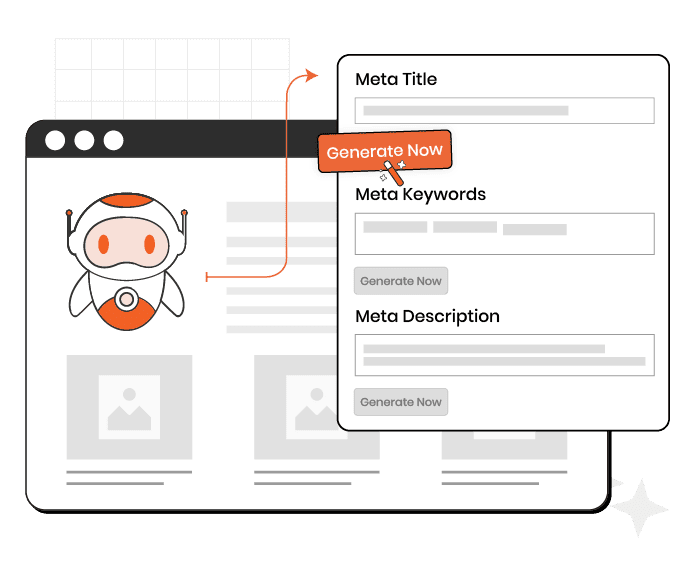
AI can generate SEO titles, meta descriptions, and body copy in seconds. Instead of waiting weeks for a copywriting team to describe a new seasonal collection, you can have optimized drafts ready the moment products are imported into the Magento backend.
Scale Category Pages and Landing Content
Category pages are often the most important pages for SEO, yet they are frequently left empty. AI allows you to populate these pages with contextually relevant introductions, internal link blocks, and buying advice at scale.
Support Blog and Buying Guides
Topical authority is built through information. AI assists in brainstorming outlines and drafting long-form content that supports your commercial pages, helping you rank for long-tail queries.
Improve Topical Coverage and Internal Linking
By analyzing your product database, AI can suggest internal links between related products or from blog posts to specific Magento categories, strengthening your site’s “link juice” distribution.
Assist Multilingual Stores
For Magento stores operating in multiple regions (e.g., Vietnam and the US), AI provides high-quality initial translations and localizations. It helps bridge the gap between Vietnamese and English content while maintaining the specific technical terminology of your niche.
The Golden Rule: AI content alone does not equal SEO success. Google rewards content that provides real value. To win, your AI workflow must be human-refined, fact-checked, and structured to match search intent.
Read more: TOP Magento 2 AI extensions for better SEO
Best Use Cases For AI Content In Magento SEO
To use AI effectively, you must apply it where it provides the most leverage. Here is how to deploy AI across the different page types of a Magento store.
Product Pages
Standard manufacturer descriptions are an SEO death sentence due to duplicate content issues. AI helps you differentiate.
- SEO Title & Meta Description: Generate variants that include keywords like “Buy,” “Online,” or specific brand names.
- Feature-Benefit Bullet Points: Transform dry technical specifications into benefit-driven bullets that appeal to the user’s emotions.
- Unique Descriptions: Use AI to rewrite manufacturer data into a brand-consistent voice, whether that is B2B professional, luxury, or technical.
- Attribute-Based Scaling: Feed the AI your Magento attributes (color, material, weight) to create highly specific descriptions.
Pro Tip: Avoid “thin content” by ensuring the AI highlights the outcome of using the product, not just its physical traits.
Category Pages (The Huge SEO Opportunity)
Most Magento category pages are just a grid of products. By adding 150–250 words of AI-assisted content, you provide Google with the context it needs to rank the page for broader head terms.
Example AI Structure for Category Content:
- H2: What This Category Solves: A brief intro on the utility of these products.
- H3: Who Should Use It: Identifying the target audience (e.g., “Professional photographers” or “Home hobbyists”).
- H3: Buying Considerations: Key factors like size, compatibility, or price points.
- FAQ Section: Using Schema markup to capture “People Also Ask” real estate.
Blog and Topical Authority
To rank a Magento store in a competitive niche, you must prove you are an expert. AI can help build “Problem-Solution” articles and “How to Choose” guides. Use AI for the initial draft and semantic keyword expansion, then have an editor add real-world insights and brand-specific advice.
Read more: Magento SEO Automation with AI Tools
Macro Semantic vs Micro Semantic for Strong AI SEO Content
Deep SEO requires more than just repeating a primary keyword. It requires semantic coverage—demonstrating to search engines that you understand the entire ecosystem of a topic.
Macro Semantic Words (Topical Authority)
These are broad concepts that support your main topic. If your topic is “Magento Product SEO,” your macro semantic coverage should include:
- On-page optimization
- Technical SEO
- Structured data
- Internal linking strategy
- Performance and Core Web Vitals
AI is excellent at identifying these pillars and ensuring they are included in your site’s architecture and long-form content.
Micro Semantic Words (Contextual Completeness)
These are specific, technical terms that provide “texture” to your content. For a Magento SEO expert, micro-elements include:
- Canonical URLs: Preventing duplicate content in layered navigation.
- Schema.org Product: Adding rich snippet data.
- Hreflang tags: Managing multi-language stores.
- Open Graph tags: Optimizing social sharing.
AI can quickly generate lists of these terms or incorporate them into technical guides, ensuring your content sounds like it was written by a specialist, provided you verify the technical accuracy.
Once you understand how Macro Semantic and Micro Semantic elements shape strong AI-powered SEO content, the next step is to turn this theory into scalable, real-world optimization on your Magento store. That’s where automation and smart tools truly make a difference.
By leveraging the BSS Commerce Magento SEO Extension integrated with a ChatGPT Extension, you can streamline content creation, enhance semantic coverage, and optimize key SEO elements more efficiently—while still maintaining human control and quality. This creates a powerful, AI-driven Magento SEO plan aligned with modern search expectations.
Explore full features of this module now: https://bsscommerce.com/magento-2-seo-extension.html
Risks of AI Content and How to Fix Them
While AI is powerful, it carries risks that can lead to Google penalties or poor user experience if left unchecked.
| Risk | Solution |
| Thin Content | Add real-world examples, screenshots of the Magento admin, or specific business logic. |
| Incorrect Info | Validate AI claims against the actual Magento version you are using (e.g., Magento 2.4.7 vs. older versions). |
| Generic Tone | Infuse the content with your brand’s unique “voice” and specific case studies. |
| Over-Optimization | Avoid keyword stuffing. Read the AI output aloud to ensure it sounds natural. |
| No EEAT | Link to author bios, include “Verified Purchase” reviews, and cite data sources. |
The Professional AI Workflow For Magento SEO Teams
To maintain quality at scale, your team should follow a standardized workflow. This prevents “AI hallucination” and ensures every page serves a business purpose.
- Define Intent + Target Query: Determine if the user is looking to buy (Transactional) or learn (Informational).
- Build Macro + Micro Semantic Set: Use an SEO tool or AI to list all must-have technical terms.
- Generate AI Draft: Use a prompt that includes your brand voice and the semantic list.
- Human Edit: This is the most critical step. Correct any Magento-specific technical errors, align the content with your business goals, and ensure UX clarity.
- Technical Optimization: Manually review headings (H1-H3), insert internal links to relevant products, and check that Schema markup is ready.
- Publish, Track, and Improve: Use Google Search Console to see which AI-assisted pages are performing and iterate based on data.
Quick Wins You Can Apply To Your Magento Store Immediately
If you want to see results from AI SEO this week, focus on these four areas:
- Add FAQs to Category Pages: Identify the top 3 questions customers ask about a category and use AI to write the answers. Implement them with FAQ Schema.
- Rewrite Duplicate Manufacturer Content: Target your top 50 best-selling products that currently use “copied” descriptions and use AI to make them unique.
- Localize Content: If you have an English store, use AI to create high-quality Vietnamese versions of your top-performing landing pages.
- Create Comparison Pages: Generate “Magento Native vs. Extension” or “Magento vs. Shopify” comparison guides to capture users in the consideration phase of the marketing funnel.
By treating AI as a sophisticated assistant rather than a replacement for human insight, Magento store owners can achieve a level of SEO coverage that was previously impossible. Use AI to build the foundation, and use your expertise to build the skyscraper.