In the competitive landscape of e-commerce, your category pages often serve as the “department store windows” of your website. While product pages target specific items, category pages capture broader, high-volume search intent. To capture this traffic, you must master the art of the meta description.
This guide provides a deep dive into how to optimize Magento category meta descriptions to increase visibility, boost click-through rates (CTR), and ultimately drive more sales in 2026.
Nội dung bài viết
- 1 What a Good Magento Category Meta Description Should Do
- 2 The Ideal Structure for Magento Meta Descriptions
- 3 Where to Edit Category Meta Descriptions in Magento 2
- 4 Content Strategy Tips: Macro and Micro Keywords
- 5 Examples of Optimized Meta Descriptions
- 6 Advanced Optimization Tips for Higher CTR
- 7 Scaling with a Multi-Category SEO Strategy
- 8 Improving CTR Beyond the Meta Description
- 9 Conclusion: Mastering the Click in 2026
What a Good Magento Category Meta Description Should Do
A meta description is a short snippet of text—roughly 155–160 characters—displayed under your page title in Search Engine Results Pages (SERPs). While Google confirmed long ago that meta descriptions are not a direct ranking factor in their algorithm, they are a vital component of an on-page SEO strategy.
A high-performing Magento category meta description should accomplish the following:
- Explain What the Category Offers: Precision is key. If a user searches for “ergonomic office chairs,” they should immediately see that your category page contains exactly that, rather than a generic “office furniture” overview.
- Highlight Key Benefits or Value: Why should a customer click your link instead of a competitor’s? Use this space to mention your Unique Selling Propositions (USPs). This could be anything from “Eco-friendly materials” to “Next-day delivery.”
- Use Important Keywords Naturally: Including your primary and secondary keywords helps with relevance. When a user’s search term matches a word in your meta description, Google often bolds that text, making your result stand out visually.
- Encourage Clicks with Persuasive Language: Think of the meta description as a “mini-ad.” Use action-oriented verbs like Discover, Browse, Shop, or Upgrade to trigger a psychological response in the searcher.
- Match User Intent: Category pages usually sit between Informational (learning about options) and Transactional (ready to buy). Your description must bridge this gap by providing enough information to be helpful while maintaining a commercial edge.
The Ideal Structure for Magento Meta Descriptions
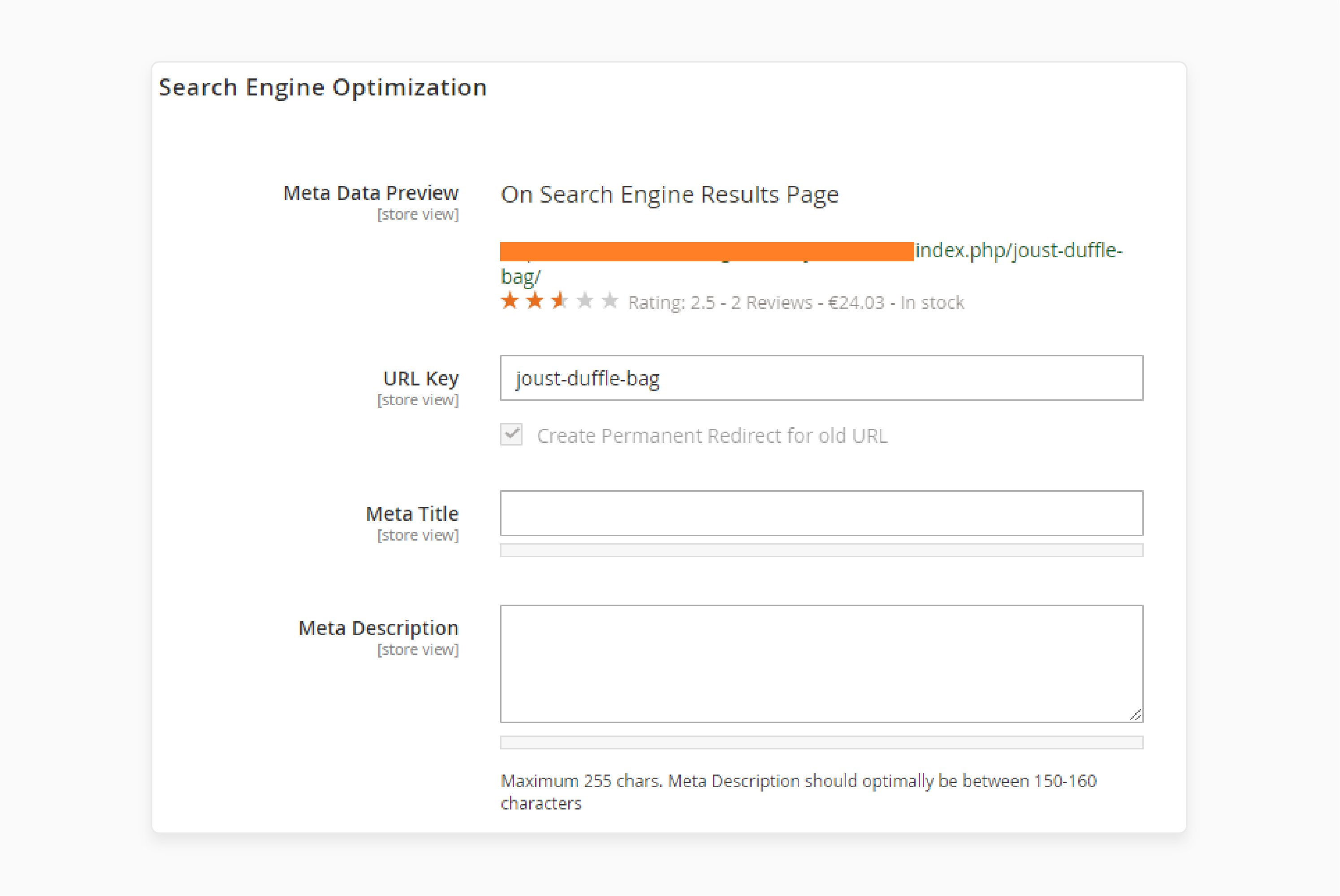
To ensure your snippets aren’t truncated by search engines, you must adhere to specific spatial constraints while maintaining a high-quality narrative flow.
Length and Technical Specs
- Desktop: Aim for 120–160 characters.
- Mobile: Keep critical information within the first 120–140 characters, as mobile screens often cut text off sooner.
- Tone: Maintain a balance of “Helpful Guide” and “Commercial Authority.”
The “Product + Value + CTA” Format
A winning formula for Magento categories follows this logical progression:
- The Hook: Identify the category clearly.
- The Evidence: Mention specific sub-types or top-tier brands.
- The Value: Why buy here? (Price, quality, shipping).
- The Action: A clear Call to Action (CTA).
A Reusable Template for Your Store
Shop [Main Keyword]. Browse our collection of [Top Products/Attributes], featuring [Benefits – price, shipping, or trust]. Discover the best [Keyword Variation] today and save.
Where to Edit Category Meta Descriptions in Magento 2
Magento 2 provides a straightforward interface for managing metadata. You do not need developer access to update these fields.
- Navigate to the Backend: Log in to your Magento Admin panel.
- Access Categories: Go to Catalog → Categories.
- Select Your Category: Choose the specific category from the tree structure on the left.
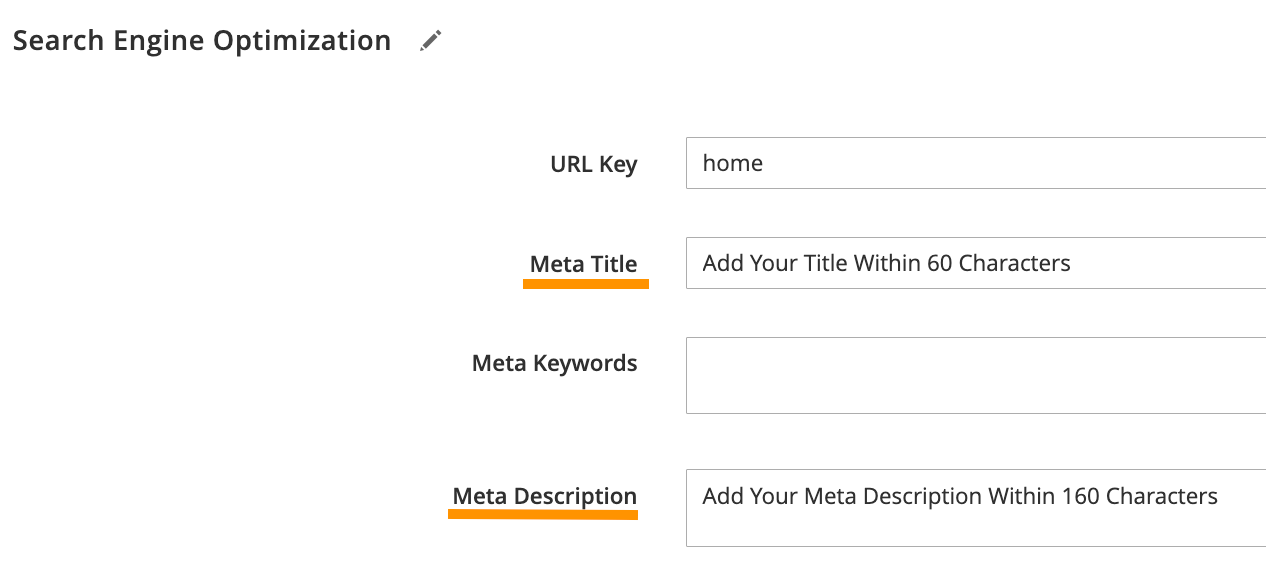
- Expand SEO Settings: Locate and click on the Search Engine Optimization section.
- Fill in the Fields:
- Meta Title: This should be 50–60 characters.
- Meta Keywords: While you can fill this in, modern search engines (Google, Bing) largely ignore this field. It is optional and generally does not impact SEO.
- Meta Description: Paste your optimized, 155-character snippet here.
- Save and Flush Cache: Click Save. Remember to refresh your Magento cache (System → Cache Management) to ensure the changes appear on the frontend immediately.
However, Magento 2 stores often contain a large number of categories, making it time-consuming to optimize each one manually. To handle meta descriptions in bulk and maintain consistency, it’s highly recommended to use a Magento 2 seo module, which allows you to generate, edit, and manage category meta descriptions more efficiently.
Content Strategy Tips: Macro and Micro Keywords
To maximize the “reach” of a single category page, you should utilize Semantic Search principles. This involves using a mix of Macro and Micro keywords.
- Macro Semantic Keywords
These are your “big picture” words. They define the primary meaning of the category.
- Example: If you sell hardware, your macro keyword is “Gaming Laptops” or “Magento Hosting.”
- Function: These tell the search engine the fundamental topic of the page.
- Micro Semantic Keywords
These are the attributes, modifiers, and contextual words that narrow down the search intent.
- Example: Cheap, waterproof, lightweight, 16GB RAM, free shipping, 2026 models.
- Function: These capture “Long-tail” traffic. A user searching for “Lightweight gaming laptops with free shipping” is much closer to a purchase than someone just searching for “laptops.”
By combining these, your description feels comprehensive to the algorithm and highly relevant to the human user.
Examples of Optimized Meta Descriptions
Let’s look at how to transform “lazy” metadata into high-converting snippets.
Example 1: Fashion Category
- Bad: Women Shoes category with many designs for all needs.
- Optimized: Shop stylish women’s shoes including heels, sneakers, and flats. Enjoy premium quality, affordable prices, and fast shipping. Find your perfect pair today.
Example 2: Electronics Category
- Bad: We sell phones from many brands.
- Optimized: Discover the latest 5G smartphones from top brands. Featuring powerful cameras, exclusive deals, and 24-hour delivery. Upgrade your mobile experience now.
Example 3: B2B Magento Store
- Bad: B2B supplies available at our store.
- Optimized: Buy high-quality B2B wholesale supplies with bulk pricing and reliable stock. Fast worldwide shipping on all business essentials. Explore our catalog today.
Advanced Optimization Tips for Higher CTR
If you want to move beyond the basics, consider these professional tactics to refine your Magento SEO.
Match Search Intent
Category pages represent Commercial Browsing. The user knows what they want but hasn’t picked the specific model yet. Use “Discovery” language:
- Explore the collection…
- Compare the best…
- Choose from a wide range of…
To learn how to align search behavior with category design, explore our guide on Mapping buyer intent to Magento category structures for better SEO.
Include Specific USPs
If you have a competitive advantage, don’t hide it. Mention:
- “Authorized Dealer” (Builds trust)
- “Hassle-free returns” (Reduces purchase anxiety)
- “Over 10,000+ satisfied customers” (Social proof)
Avoid These Common SEO Mistakes
- Keyword Stuffing: Writing “Buy shoes, cheap shoes, best shoes, women shoes” looks like spam and triggers search engine penalties.
- Repeating the Title Tag: Don’t just copy and paste your Meta Title into the Description field. Use the Description to expand on the Title.
- Duplicate Metadata: Using the same description for “Men’s Running Shoes” and “Men’s Sneakers” confuses Google and causes your pages to compete against each other.
- Leaving it Blank: If you leave it blank, Google will pull random text from your page (like navigation menus or footer links), which usually looks messy.
Scaling with a Multi-Category SEO Strategy
For Magento stores with thousands of categories, manual optimization is a daunting task. In these cases, you should use a tiered approach.
- The 80/20 Rule: Manually write bespoke meta descriptions for your top 20% of categories—the ones that generate the most revenue. These deserve the “human touch.”
- Programmatic Meta Descriptions: For the remaining categories, use Magento’s ability to generate metadata via logic or third-party SEO extensions. You can set up a pattern like: “Buy {{category_name}} at {{store_name}}. We offer a wide selection of {{sub_categories}} with fast shipping and the best prices in {{year}}.”
- Periodic Audits: Inventory changes. Use tools like Screaming Frog or SEMrush to crawl your Magento site quarterly to find missing or truncated meta descriptions.
Improving CTR Beyond the Meta Description
SEO is a holistic process. While the meta description gets them to look, other factors get them to click.
- Category Title (H1): Ensure the heading on the actual page matches the promise made in the meta description.
- Breadcrumb Clarity: Clear breadcrumbs (Home > Electronics > Smartphones) help Google understand your site hierarchy and often appear in the SERPs.
- Schema Markup: Use Product or Category Schema to show “Star Ratings” or “Price Ranges” directly in the search results.
- Page Content Quality: A short introductory paragraph at the top of your category page (Category Description) provides more context for search engines to index.
Optimizing your Magento category meta descriptions is one of the highest-ROI activities in e-commerce SEO. By focusing on clarity, value, and intent, you can turn passive searchers into active shoppers.
While meta descriptions influence click-through rates, they are only one piece of a fully optimized Magento category page. Elements such as page titles, on-page content, internal linking, breadcrumbs, and technical structure all work together to determine long-term ranking and conversion performance. For a complete, step-by-step approach, see our in-depth guide on optimizing Magento category pages for SEO, where we cover both technical and content-level optimizations in detail.
Conclusion: Mastering the Click in 2026
Optimizing Magento category meta descriptions is a high-impact SEO win. While they don’t directly change your rank, they act as your “digital storefront window,” directly determining your click-through rate. By combining strategic keywords with clear value propositions and strong calls to action, you transform passive search results into active sales opportunities.
In 2026, the stores that win are those that prioritize clarity and user intent. Regularly audit your top categories, use smart templates for scale, and always put the customer’s needs first in your copy. This small investment in metadata will yield significant returns in organic traffic and brand authority.